Blog

  • Howdy, YouAble

    A empresa solicitou uma apresentação e nem sequer deu retorno para agradecer. Nada que uma estrelinha no Google não resolva. Então, ela retornou com sua caixinha amadora e pessoal do Gmail.

  • Design Thinking: A Human-Centered Approach to Innovation

    Design Thinking: A Human-Centered Approach to Innovation

    Design Thinking: A Human-Centered Approach to Innovation

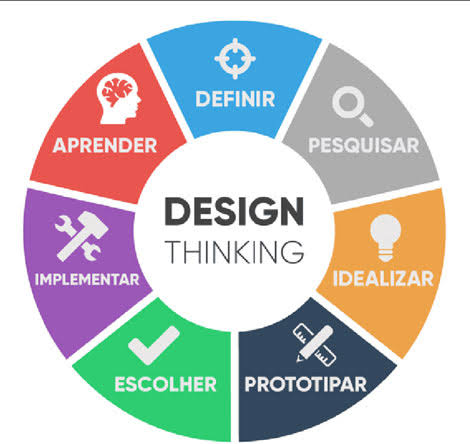
    Design thinking is a creative problem-solving process that focuses on understanding people’s needs. It’s a way to come up with innovative solutions by thinking from the user’s perspective.

    Imagine it like a toolbox with empathy, creativity, and experimentation to solve problems in new ways. That’s the essence of Design Thinking, a powerful approach to innovation that is changing the way businesses operate. It’s not just about creating fancy products or sleek designs; it’s about understanding the core needs of people and crafting solutions that truly make a difference.

    Design thinking goes beyond traditional problem-solving methods. It throws out the rigid rulebook and embraces a more iterative and user-centric approach. Here’s how it works:

    • Empathy is at the Heart: The process starts by developing a deep understanding of the people you’re designing for. This involves user research, observation, and even co-creation sessions to uncover their needs, desires, and pain points.
    • Unleashing Creativity: Once you understand the user, it’s time to brainstorm a wide range of solutions. Design thinking encourages wild ideas and out-of-the-box thinking. The goal is to generate as many possibilities as possible without judgment.
    • Prototyping and Testing: Forget grand plans and lengthy development cycles. Design thinking emphasizes creating quick and low-fidelity prototypes – think sketches, mockups, or even role-playing – to test your ideas with real users. This allows you to gather feedback early and iterate on your designs before investing heavily in development.
    • Embrace Iteration: Design thinking is not a linear process. It’s a continuous loop of learning, testing, and refining. Based on user feedback, you’ll constantly improve your ideas until you land on a solution that truly meets their needs.

    This human-centered approach is what makes design thinking so powerful. By prioritizing empathy and understanding the people you’re designing for, you’re more likely to create solutions that are not only innovative but also truly impactful.

    Design thinking can be applied to a wide range of challenges, from developing new products and services to revamping internal processes and improving customer experiences. So, the next time you’re facing a complex problem, ditch the traditional methods and embrace the power of design thinking. You might just surprise yourself with the innovative solutions you can uncover.

  • Protegido: Howdy, Paulo

    Este conteúdo está protegido por senha. Para vê-lo, digite sua senha abaixo.

  • Protegido: Basic C calculator

    Este conteúdo está protegido por senha. Para vê-lo, digite sua senha abaixo.

  • Curso de Oratória e Retórica: Um Mergulho na Arte da Persuasão

    Curso de Oratória e Retórica: Um Mergulho na Arte da Persuasão

    Autor: Mário Ferreira dos Santos

    Tônica:

    • Abordagem prática e completa: O livro oferece uma visão abrangente da oratória e da retórica, desde seus fundamentos até técnicas avançadas de comunicação persuasiva.
    • Aplicabilidade: As técnicas e ferramentas apresentadas são aplicáveis a diversas situações, desde apresentações de negócios até palestras e debates.
    • Riqueza de exemplos: O autor utiliza exemplos históricos e contemporâneos para ilustrar os conceitos, tornando o aprendizado mais dinâmico e envolvente.

    Conteúdo:

    • Parte 1: A Oratória:
      • Fundamentos: Conceito de oratória, história da oratória, perfil do orador ideal, elementos da comunicação eficaz.
      • Técnicas: Preparação da fala, organização do discurso, recursos vocais e corporais, controle do nervosismo.
      • Aplicação: Dicas para diferentes tipos de apresentações, como palestras, reuniões, entrevistas e debates.
    • Parte 2: A Retórica:
      • Fundamentos: Conceito de retórica, os três gêneros da oratória (deliberativo, judiciário e epidítico), os cinco cânones da retórica (inventio, dispositio, elocutio, memoria e actio).
      • Argumentação: Tipos de argumentos, falácias lógicas, estratégias de persuasão.
      • Eloquência: Figuras de linguagem, recursos estilísticos, ritmo e entonação da voz.

    Pontos fortes:

    • Clareza e objetividade: O livro é escrito em linguagem clara e acessível, facilitando a compreensão dos conceitos.
    • Exercícios práticos: Ao final de cada capítulo, o autor propõe exercícios para que o leitor possa colocar em prática o que aprendeu.
    • Visão holística da comunicação: O livro vai além das técnicas de oratória e retórica, abordando também aspectos como a inteligência emocional e a comunicação não verbal.

    Para quem é recomendado:

    • Profissionais: Pessoas que desejam aprimorar suas habilidades de comunicação em diferentes contextos profissionais.
    • Estudantes: Alunos de graduação e pós-graduação que buscam desenvolver suas habilidades oratórias para apresentações de trabalhos e seminários.
    • Público em geral: Qualquer pessoa que deseja se comunicar com mais clareza, segurança e persuasão.

    Em resumo, “Curso de Oratória e Retórica” é uma obra completa e valiosa para quem busca dominar a arte da comunicação persuasiva.

    Outros pontos importantes:

    • O livro é considerado um clássico na área de oratória e retórica.
    • A obra foi publicada pela primeira vez em 1954 e já passou por diversas reedições.
    • O autor, Mário Ferreira dos Santos, foi um escritor e professor brasileiro com vasta experiência em oratória e comunicação.

    Espero que este resumo tenha sido útil!

  • Protegido: Howdy, Agência Magna

    Este conteúdo está protegido por senha. Para vê-lo, digite sua senha abaixo.

  • Diferenças entre React e Next.js

    Diferenças entre React e Next.js

    Tanto o Next.js quanto o React são ferramentas poderosas para a construção de aplicativos da web, mas possuem diferenças distintas que atendem a necessidades diferentes. Aqui está um detalhamento:

    O que eles são:

    • React: uma biblioteca JavaScript para construir componentes de interfaces de usuário (UI). É leve e flexível, oferecendo blocos de construção para criar páginas da web dinâmicas e interativas.
    • Next.js: uma estrutura construída sobre React que adiciona recursos e estrutura ao processo de desenvolvimento. Ele oferece renderização no lado do servidor, roteamento, busca de dados e outras funcionalidades prontas para uso.

    Principais diferenças:

    FrameworkReactNext.js
    FocoConstruir componentes de UIConstruir aplicações web full-stack
    RenderizaçãoPrincipalmente renderização do lado do cliente (CSR)Renderização do lado do servidor (SSR), geração de site estático (SSG)
    RoteamentoConfiguração manual necessáriaRoteamento automático integrado
    Busca de dadosRequer bibliotecas ou códigos adicionaisBusca de dados integrada com rotas de API e getStaticProps
    FlexibilidadeAltamente flexível, requer mais configuraçãoMenos flexível, mas oferece desenvolvimento mais rápido e benefícios de SEO
    ComplexidadeBarreira de entrada inferiorCurva de aprendizado mais acentuada devido a recursos adicionais
    Adequado paraAplicativos web dinâmicos, aplicativos de página únicaSites estáticos, blogs, e-commerce, páginas de marketing

    Escolhendo a ferramenta certa:

    • React: se você precisa de flexibilidade e controle máximo sobre seus componentes de UI ou planeja construir um aplicativo web complexo e dinâmico com recursos exclusivos.
    • Next.js: se você priorizar desenvolvimento mais rápido, otimização de SEO, pré-renderização para desempenho e uma estrutura que lide com necessidades comuns de aplicativos da web, como roteamento e busca de dados.

    Pontos adicionais:

    • Você pode usar componentes React em aplicativos Next.js.
    • Next.js está em constante evolução, oferecendo novos recursos e melhorias.
    • Tanto React quanto Next.js têm comunidades grandes e ativas para suporte e aprendizado.

    Em última análise, a melhor escolha depende dos requisitos específicos do seu projeto e das suas preferências de desenvolvimento. Considere cuidadosamente os prós e os contras de cada opção antes de tomar sua decisão.

  • React vs Next.js

    Both Next.js and React are powerful tools for building web applications, but they have distinct differences that cater to different needs. Here’s a breakdown:

    What they are:

    • React: A JavaScript library for building user interfaces (UI) components. It’s lightweight and flexible, offering building blocks to create dynamic and interactive web pages.
    • Next.js: A framework built on top of React that adds features and structure to the development process. It offers server-side rendering, routing, data fetching, and other functionalities out-of-the-box.

    Key Differences:

    [table id=2 /]

    Choosing the right tool:

    • React: If you need maximum flexibility and control over your UI components, or plan to build a complex, dynamic web application with unique features.
    • Next.js: If you prioritize faster development, SEO optimization, pre-rendering for performance, and a framework that handles common web application needs like routing and data fetching.

    Additional points:

    • You can use React components within Next.js applications.
    • Next.js is constantly evolving, offering new features and improvements.
    • Both React and Next.js have large and active communities for support and learning.

    Ultimately, the best choice depends on your specific project requirements and your development preferences. Consider the pros and cons of each option carefully before making your decision.

  • Differences between COBIT, ISO 27001 and NIST

    Differences between COBIT, ISO 27001 and NIST

    The main differences between COBIT, ISO 27001, and NIST are as follows:

    Focus and Core Area:

    • COBIT: Focuses on IT governance and management, providing a comprehensive framework for the effective control and management of IT processes.
    • ISO 27001: Focuses on information security management, providing a systematic approach to managing information security risks and implementing an Information Security Management System (ISMS).
    • NIST: Focuses on enhancing the security and resilience of information systems, providing guidance and standards for managing cybersecurity risks.

    Source and Application:

    • COBIT: Developed by ISACA and widely used in large enterprises to ensure effective governance and management of IT.
    • ISO 27001: Developed by the International Organization for Standardization (ISO) and widely used across various sectors and sizes to implement and manage an Information Security Management System.
    • NIST: Developed by the National Institute of Standards and Technology (NIST) and primarily used in the United States as a framework for enhancing the security and resilience of information systems. However, it has gained widespread acceptance and international implementation as well.

    Geographic Orientation:

    • COBIT and ISO 27001: These are international frameworks and are globally recognized. They can be used in any country or industry.
    • NIST: It is primarily an American framework and used mainly in the United States. However, it has also gained broad acceptance and international application.

    Scope and Detail:

    • COBIT: Provides a comprehensive framework for IT governance and management, encompassing a wide range of processes, controls, and guidelines.
    • ISO 27001: Primarily focuses on information security management and provides a set of effective security requirements and controls.
    • NIST: Offers a comprehensive set of guidelines and standards for improving the security and resilience of information systems, including a catalog of recommended security controls.

    In summary, COBIT focuses on IT governance and management, ISO 27001 focuses on information security management, and NIST focuses on enhancing the security and resilience of information systems.

  • Discover WP-CLI for creating and maintaining WordPress websites

    Imagine managing your WordPress site without ever touching the admin panel. That’s the power of WP-CLI, a command-line interface that lets you control your website directly from your terminal. Think of it as a Swiss Army knife for WordPress power users, letting you do everything from installing plugins and themes to updating your core software and managing user accounts, all with simple text commands.

    Here are some of the things you can do with WP-CLI:

    • Automate tasks: Run repetitive tasks like backups, updates, and database optimization with a single command, freeing up your time for more important things.
    • Manage your site from anywhere: No need to be in front of a specific computer to manage your site. Access WP-CLI from any machine with a terminal and an internet connection.
    • Increase efficiency: Typing commands is often faster than clicking through menus, especially for frequent tasks.
    • Reduce errors: Command-line commands are less prone to human error than clicking around the admin panel.
    • Extend WordPress functionality: WP-CLI has a vibrant community that develops plugins and extensions, adding even more capabilities to the tool.

    Whether you’re a developer, a sysadmin, or just a power user who wants to take control of your WordPress site, WP-CLI is a valuable tool to have in your arsenal.

    If you’re interested in learning more about WP-CLI, check out the official website: https://wp-cli.org/

    And if you’re a cPanel Admin, you may be interested in how to install it even in a shared hosting without root nor sudo access.

    I hope this helps! Let me know if you have any other questions.